

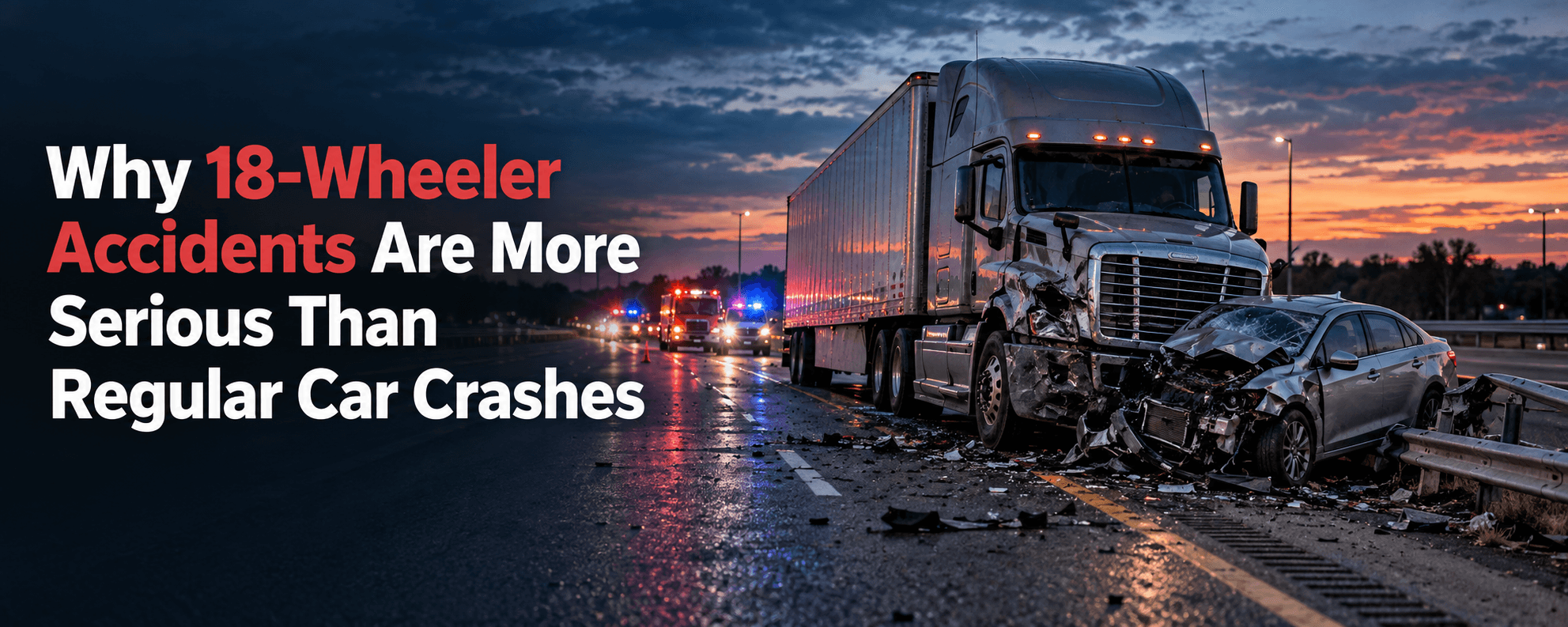
A collision between two passenger cars can be serious. But when one of those vehicles is an 18-wheeler, the consequences can be dramatically different. The difference isn’t simply that a truck is “bigger.” Commercial trucks can weigh many times more than passenger vehicles, require substantially more space to stop and maneuver, and have large blind spots that create additional challenges on the road.
According to the Federal Motor Carrier Safety Administration (FMCSA), trucks can be 20 to 30 times heavier than passenger vehicles, and a fully loaded tractor-trailer can weigh as much as 80,000 pounds. The agency notes that this difference in size and weight increases the potential for more severe crash damage, injuries, and fatalities. That is why an 18-wheeler accident can turn an ordinary traffic incident into a life-changing event. If you’ve been injured in a truck crash, understanding why these collisions are different can also help you understand why the resulting legal claims may be more complicated.
Why the Size and Weight of an 18-Wheeler Matter
Physics plays an important role in any collision. An 18-wheeler carries substantially more mass than a passenger car. When that much mass is moving, the force involved in a collision can be significant. A passenger vehicle may sustain extensive damage even when the truck itself appears relatively unaffected. For occupants of the smaller vehicle, the consequences can include serious or catastrophic injuries.
The FMCSA specifically warns that the substantial weight difference between trucks and passenger vehicles increases the risk of severe crash damage, injuries, and fatalities. This doesn’t mean every truck accident causes severe injuries. However, the size and weight difference can create circumstances that make these collisions particularly dangerous.
18-Wheelers Require More Time and Distance to Stop
One of the biggest differences between a passenger vehicle and a commercial truck is stopping distance. The FMCSA notes that large trucks and buses may require the length of up to two football fields to stop safely, depending on the circumstances.
This means a truck driver who encounters sudden traffic may have considerably less ability to stop immediately. Speed, road conditions, weather, traffic, braking performance, vehicle weight, and the driver’s actions can all affect stopping distance. For passenger vehicle drivers, this is one reason maintaining adequate space around commercial trucks is important. For accident investigations, questions about following distance, braking, speed, traffic conditions, and vehicle maintenance may also become important when determining how a crash occurred.
Large Truck Blind Spots Can Create Additional Risks
18-wheelers have significant blind spots, often called “no-zones.” A passenger vehicle can be difficult for a truck driver to see when it is positioned in one of these areas. The FMCSA advises passenger vehicle drivers to avoid lingering in truck blind spots and explains that if you cannot see the truck driver in the truck’s mirror, the driver may not be able to see you.
Blind spots can become particularly important during:
- Lane changes
- Merging
- Passing
- Turning
- Heavy traffic
- Highway congestion
If a truck moves into a lane occupied by a smaller vehicle, the resulting collision can cause significant vehicle damage and serious injuries.
Wide Turns Create Unique Dangers
Commercial trucks don’t maneuver like passenger cars. An 18-wheeler may need additional space to make a turn, particularly when turning right. The truck may move outward before completing the turn, creating a situation that smaller vehicles need to anticipate. The FMCSA specifically warns that large trucks require extra space and time to make wide turns safely. A collision during a turning maneuver can involve significant vehicle damage and serious injuries, particularly if a smaller vehicle becomes trapped alongside or beneath the truck.
Cargo Shifts and Truck Rollovers Can Create Multiple Hazards
An 18-wheeler isn’t simply a large vehicle carrying weight. Its cargo can also affect how the vehicle handles. Improperly secured or shifting cargo can contribute to a loss of control. FMCSA research has identified cargo shift among the factors associated with serious large-truck crashes. Trucks also have a higher center of gravity than passenger vehicles, which can create additional rollover concerns during certain maneuvers. A rollover can create a chain reaction involving multiple vehicles, spilled cargo, blocked lanes, or additional collisions.
Common Injuries After an 18-Wheeler Accident
Because of the forces involved, victims of 18-wheeler accidents can experience a wide range of injuries.
These may include:
- Traumatic brain injuries
- Spinal cord injuries
- Neck and back injuries
- Broken bones
- Internal injuries
- Crush injuries
- Severe lacerations
- Amputations
- Burns
- Permanent disabilities
Some injuries are immediately obvious, while others may become clearer only after medical evaluation Anyone involved in a serious truck collision should take symptoms seriously and seek appropriate medical attention.
An 18-Wheeler Crash Can Cause Extensive Property Damage
A passenger car involved in an 18-wheeler crash may sustain extensive damage. Depending on the type of collision, the vehicle could be:
- Rear-ended
- Sideswiped
- Crushed
- Pushed into another vehicle
- Forced off the roadway
- Struck during a turning maneuver
The resulting property damage can be substantial However, the financial consequences may extend beyond vehicle repairs. Victims may also face medical expenses, lost income, rehabilitation costs, reduced earning capacity, and other losses.
Why 18-Wheeler Accident Claims Can Be More Complicated
A regular car accident may involve two drivers and their insurance companies. An 18-wheeler accident can involve considerably more parties.
Depending on the circumstances, a claim may raise questions about:
- The truck driver
- The trucking company
- The vehicle owner
- Maintenance providers
- Cargo loaders
- Manufacturers
- Other potentially responsible parties
Determining responsibility may require reviewing records and evidence that aren’t normally available to an accident victim. This evidence can include driver information, vehicle maintenance records, cargo information, photographs, witness statements, accident reports, and other documentation. FMCSA research emphasizes that large-truck crashes can involve multiple contributing factors, including driver behavior, vehicle conditions, roadway conditions, weather, and other circumstances, rather than one simple cause.
Why Evidence Matters After an 18-Wheeler Accident
Evidence can be particularly important in a commercial truck accident. The circumstances of the collision may need to be reconstructed using photographs, physical evidence, witness accounts, vehicle information, and other available records.
If you’ve been involved in an 18-wheeler crash, don’t assume that the insurance company’s investigation will answer every question on your behalf. When it is safe to do so, consider taking steps to preserve important information:
- Document the accident scene with photographs or videos.
- Keep your medical records and bills.
- Save contact information for witnesses.
- Preserve photographs and other evidence.
- Keep copies of accident-related documents.
- Avoid repairing or disposing of important physical evidence before determining whether it may need to be inspected.
What Should You Do After an 18-Wheeler Crash?
If you’re involved in a serious truck accident, focus first on your health and immediate safety. Call 911 if necessary and get medical attention. When it is safe, document the scene and exchange information with the appropriate parties. You should also take reasonable steps to preserve evidence and be cautious when communicating with insurance companies. Don’t assume that the first settlement offer represents the full value of your losses. Your medical treatment may still be ongoing, and you may not yet know how the accident will affect your ability to work or your daily life. If the crash resulted in serious injuries, consider speaking with a Texas truck accident attorney before making major decisions about your claim.
When a Truck Crash Changes More Than Your Vehicle
An 18-wheeler accident can affect far more than your car. It can affect your health, your ability to work, your finances, and your plans for the future. The size and weight of commercial trucks create unique risks that aren’t present to the same degree in ordinary passenger-vehicle crashes.
If you’ve been injured in an 18-wheeler accident, you shouldn’t have to navigate the legal and insurance process without understanding your options. At Hit Back Law, we help injured people understand their rights after serious accidents and pursue the compensation available under the law. If you or someone you love has been injured in a truck crash, Contact today Hit Back Law to discuss your situation and learn what steps may be available to you. This article is for general informational purposes only and does not constitute legal advice. Every truck accident claim depends on its specific facts and applicable Texas law.
Frequently Asked Questions About 18-Wheeler Accidents
1. Why are 18-wheeler accidents more serious than regular car crashes?
The significant difference in size and weight can increase the force involved in a collision. Large trucks also have longer stopping distances, large blind spots, and different handling characteristics, all of which can contribute to serious crashes.
2. What injuries can result from an 18-wheeler accident?
Truck crashes can result in traumatic brain injuries, spinal injuries, broken bones, internal injuries, crush injuries, burns, and other serious or permanent injuries.
3. Who can be responsible for an 18-wheeler accident?
Depending on the circumstances, potentially responsible parties may include the truck driver, trucking company, vehicle owner, maintenance provider, cargo handler, manufacturer, or other parties.
4. Why are truck accident claims complicated?
Commercial truck accidents can involve multiple parties, insurance policies, and sources of evidence. Determining what caused the collision may require a detailed investigation into driver conduct, vehicle condition, cargo, roadway conditions, and other factors.
5. Should I speak with a truck accident lawyer after a crash?
If you suffered significant injuries, liability is disputed, or the trucking company’s insurer is contacting you, legal guidance can help you understand your rights and options before making important decisions about your claim.