

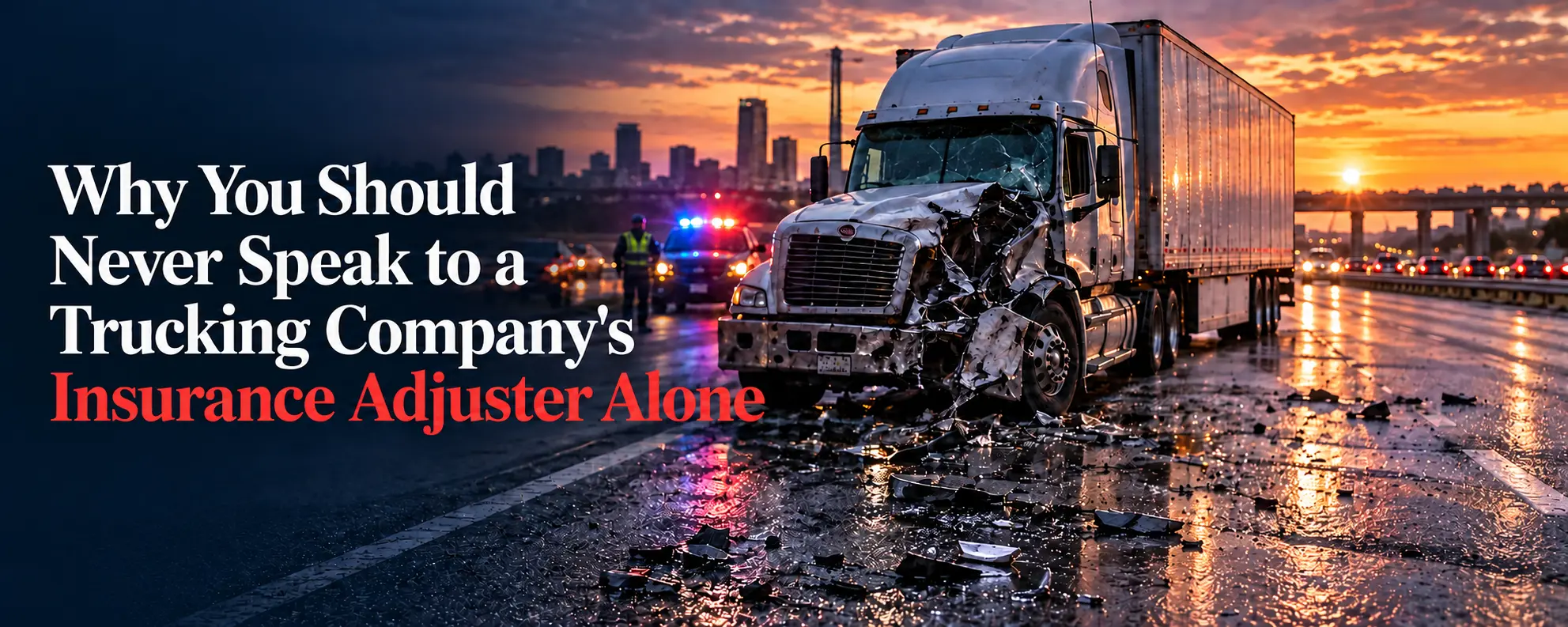
A phone call after a truck accident can sound harmless. The trucking company’s insurance adjuster may say they’re simply trying to understand what happened. But remember: the adjuster works for the insurance company, not for you. That doesn’t mean every question is improper. It means you should understand what you’re being asked and how your answers could affect your claim. After a serious truck accident, speaking with a trucking company insurance adjuster alone can create unnecessary risks.
Why Is the Trucking Company’s Adjuster Calling?
After a collision, an insurance adjuster may investigate the accident, review evidence, evaluate damages, and determine what the insurer believes the claim may be worth. A commercial truck accident can involve more evidence and potentially responsible parties than an ordinary passenger-vehicle collision. The insurer may examine the driver’s actions, vehicle damage, police reports, witnesses, medical information, and circumstances surrounding the crash. That makes your statements significant.
Your First Conversation Can Matter
Immediately after a crash, you may be injured, shaken, or unsure about what happened. You may not know the full extent of your injuries or remember every detail. Yet an adjuster may ask you to describe the accident or explain how you feel. You may give an incomplete answer without realizing it. For example, saying “I’m fine” immediately after a crash could later be used to question your injuries, even if significant pain develops later. Similarly, guessing about the truck’s speed, your own speed, traffic conditions, or who had the right of way can create inconsistencies. You do not need to guess simply because someone asks.
Be Careful With Recorded Statements
An adjuster may ask for a recorded statement. Before agreeing, understand what you’re being asked to provide and how it could be used. A recording creates a permanent record of your words. If your medical condition develops or additional evidence becomes available, an earlier statement may later be compared with what you say. That doesn’t mean you should hide information. It means you should think carefully before making detailed statements without understanding your position.
Don’t Minimize Your Injuries
Truck collisions can cause serious injuries, and some symptoms may become clearer after the initial shock wears off. When an adjuster asks how you are feeling, be honest. Do not minimize pain because you want to sound positive or aren’t sure whether a symptom matters. Possible injuries can include head or brain injuries, neck or back injuries, broken bones, soft-tissue injuries, internal injuries, nerve damage, and long-term mobility problems. Your health should always come before discussing your claim.
Don’t Guess About Fault
You don’t need to determine legal responsibility during an insurance call. Truck accident liability can involve questions about the driver, trucking company, vehicle maintenance, loading, road conditions, and other circumstances. Stick to what you personally know. Describe what you saw and experienced rather than making conclusions about who was legally responsible.
Don’t Rush Into a Settlement
An early settlement offer may look attractive when medical bills, vehicle damage, and missed work are piling up. But you may not yet know the full extent of your losses. Treatment may still be ongoing, your recovery may be uncertain, and additional care may be necessary. Before accepting a settlement, consider legal guidance so you understand what the offer covers and whether it adequately accounts for your losses.
Preserve Your Own Evidence
Keep copies of police reports, medical records, bills, photographs, repair estimates, insurance correspondence, witness information, and missed-work documentation. Preserve original photographs or video from the crash as well. Don’t assume the insurance company will preserve every piece of evidence that may help your case. Keeping your own records can help you and your attorney understand what happened and document the losses associated with the accident.
Why Truck Accident Claims Can Be More Complicated
A truck accident can involve multiple parties. Depending on the circumstances, issues may involve the truck driver, trucking company, vehicle owner, maintenance provider, cargo handler, or others. Important evidence may also need to be preserved quickly. This is one reason speaking with a commercial truck accident lawyer early can be useful. An attorney can help evaluate the circumstances, communicate with insurers when appropriate, and identify evidence that may matter to your claim.
You Don’t Have to Handle the Adjuster Alone
You may need to communicate with insurers during the claims process. The important question is whether you’re prepared for that conversation. If you have serious injuries, disputed liability, or significant losses, consider legal guidance before providing a recorded statement or discussing settlement. Your first conversation with an insurance adjuster should not define your claim.
Protect Your Claim From the Start
After a truck accident, you may be dealing with pain, treatment, lost income, property damage, and uncertainty. You don’t need to make the process harder by navigating an insurance investigation without understanding your rights.
At Hit Back Law, we help injured people understand their options after serious accidents, including complex truck collisions. If an adjuster has contacted you, don’t feel pressured to handle the conversation alone.
Contact Hit Back Law to discuss your situation and learn what steps may be appropriate for your claim.
This article is for general informational purposes only and is not legal advice. Texas truck accident claims depend on the specific facts, applicable insurance policies, and current Texas law.
Frequently Asked Questions
1. Can a trucking company’s insurance adjuster contact me after an accident?
Yes. An insurer may contact you while investigating a claim. Be careful about providing detailed statements before understanding your rights and the potential impact of your answers.
2. Should I give a recorded statement?
Understand why it is requested and how it may be used before agreeing. If you have significant injuries or a disputed claim, consider speaking with a lawyer first.
3. Can I accept an insurance settlement immediately?
You can consider an offer, but accepting one before understanding your injuries and losses may be risky. Legal guidance can help you evaluate what the settlement covers.
4. Why are truck accident claims more complicated?
Commercial crashes can involve drivers, trucking companies, vehicle owners, maintenance providers, cargo handlers, and other potentially responsible parties, making evidence and insurance issues more complex.
5. When should I contact a truck accident lawyer?
Consider getting legal guidance early, particularly if you suffered serious injuries, liability is disputed, or the trucking company’s insurer is requesting detailed statements or offering a settlement.