

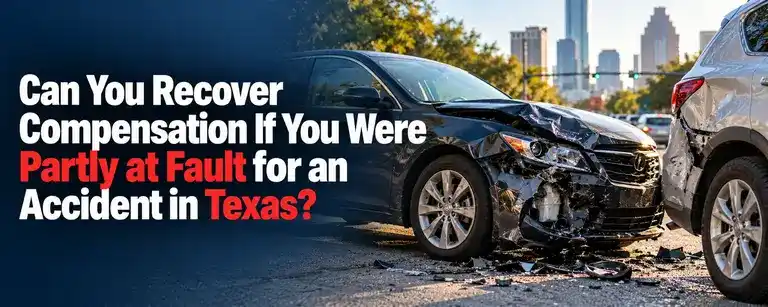
You were injured in an accident. You believe the other person was responsible, but there is one complication: you may have contributed to what happened. Perhaps you were driving slightly over the speed limit, became distracted for a moment, or the other driver’s insurance company is arguing that you could have done something differently to avoid the collision. Does that mean you lose your right to compensation?
Not necessarily.
Texas follows a legal system known as proportionate responsibility, commonly referred to as comparative fault. Under Chapter 33 of the Texas Civil Practice and Remedies Code, an injured person whose percentage of responsibility is greater than 50% generally cannot recover damages in an action covered by the statute. If the person’s responsibility is 50% or less, the damages awarded are generally reduced according to that percentage.
Understanding this rule can be particularly important if you are pursuing a serious injury claim in Laredo and an insurance company argues that you were partly responsible.
If you have been injured in an accident, Hit Back Law can help you understand your legal options and the evidence that may matter to your claim.
What Does “Partly at Fault” Mean in Texas?
Being partly at fault means that your actions may have contributed to an accident or the resulting injuries. It does not necessarily mean you caused the entire accident.
For example, imagine another driver makes an unsafe lane change and hits your vehicle. You believe the other driver was responsible, but evidence suggests you were traveling somewhat faster than the posted speed limit.
A factfinder could determine that both drivers contributed to the collision.
Texas law provides a framework for allocating responsibility among parties whose conduct contributed to the harm. The important question is not simply whether you were partly at fault, but what percentage of responsibility applies and what evidence supports that conclusion.
Can You Still Recover Compensation If You Were Partly Responsible?
Yes, potentially. Texas law does not automatically prevent someone from recovering damages simply because they contributed to an accident.
The critical threshold is whether the injured person’s responsibility exceeds 50%.
Examples of How Comparative Fault Works in Texas
Consider the following simplified examples:
| Total damages | Your responsibility | Illustrative damages after reduction |
|---|---|---|
| $100,000 | 20% | $80,000 |
| $100,000 | 40% | $60,000 |
| $100,000 | 50% | $50,000 |
| $100,000 | 51% | Generally barred under Chapter 33 |
These examples illustrate the general rule under Texas Civil Practice and Remedies Code Section 33.001. Actual recoveries depend on the facts, evidence, applicable law, and damages involved. If your percentage of responsibility is greater than 50%, you generally cannot recover damages in an action covered by Chapter 33.
Who Determines How Much Fault You Have?
An insurance adjuster may investigate an accident and conclude that its insured was only partially responsible. The insurer may then make a settlement offer based on that assessment.
However, an insurance company’s proposed percentage of fault is not automatically the final legal determination.
The parties may disagree about what happened, and the available evidence may support a different conclusion. If a lawsuit proceeds, responsibility is determined through the applicable legal process.
Before accepting an insurer’s statement that you were 30% or 40% responsible, it is worth understanding what evidence supports that position.
What Evidence Can Help Establish Fault?
When responsibility is disputed, evidence can play an important role in explaining how an accident occurred.
Depending on the circumstances, relevant evidence may include:
- Photographs and videos of the accident scene
- Police accident reports
- Statements from independent witnesses
- Traffic camera, surveillance, or dashcam footage
- Vehicle damage and accident reconstruction evidence
- Medical records documenting your injuries
- Cellphone or electronic evidence when legally relevant
For example, a traffic camera recording may contradict an allegation that you were speeding. An independent witness may also provide an account that differs from the other driver’s version of events.
Preserving relevant evidence can help clarify what happened and whether an allegation of partial fault is supported.
Common Situations Where Partial Fault May Be Alleged
Comparative-fault arguments can arise in several types of personal injury claims.
Car Accidents
Drivers may be accused of speeding, following too closely, failing to yield, making an improper turn, or changing lanes unsafely. Even when another driver contributed to the collision, these allegations may affect the discussion about responsibility.
If you were injured in a collision, learn more about your options on our Laredo car accident lawyer .
Motorcycle Accidents
Motorcyclists may face allegations involving speed, lane position, visibility, or failure to take evasive action. Because motorcyclists have less physical protection than occupants of passenger vehicles, documenting the circumstances of a collision can be particularly important. Explore the firm’s available personal injury practice areas to learn more about the types of cases it handles.
18-Wheeler and Truck Accidents
Truck accident claims may involve additional questions about driver fatigue, vehicle maintenance, cargo loading, and commercial trucking records. When multiple drivers, companies, or other factors may have contributed to a collision, determining responsibility can become more complicated. The evidence may need to be reviewed to understand how each party’s conduct contributed to the accident.
Slip and Fall and Premises Liability Claims
Comparative responsibility may also arise when someone is injured on another person’s property.
For example, a property owner may be accused of failing to address a dangerous condition, while the injured person may be accused of ignoring a hazard.
The applicable legal standards depend on the type of claim and the specific circumstances.
If you were injured because of a potentially dangerous property condition, visit our Laredo slip and fall lawyer page.
What Happens to Your Damages If You Are Partly at Fault?
The financial impact generally depends on the percentage of responsibility assigned to you and the damages established by the evidence.
Suppose an injured person has the following losses for purposes of a simplified example:
- Medical expenses: $40,000
- Lost income: $20,000
- Other legally recoverable damages: $40,000
The total damages would be $100,000.
If the injured person were found 25% responsible, the damages would generally be reduced by that percentage, leaving $75,000.
However, calculating the reduction is only one part of a claim. Establishing the underlying damages and determining the appropriate percentage of responsibility can require a careful review of the evidence.
What If the Other Driver Was Mostly Responsible?
Being partly responsible does not automatically eliminate the other driver’s responsibility.
Imagine another driver runs a red light and causes a collision, but evidence also suggests you were following too closely.
The fact that you may have contributed to the accident does not necessarily mean the other driver escapes responsibility. Texas’s proportionate-responsibility framework considers the responsibility of the parties whose conduct contributed to the harm.
It is important to evaluate the entire accident rather than allowing the discussion to focus on one isolated detail.
What Should You Do If the Insurance Company Blames You?
If an insurance company says you were partly responsible, do not automatically assume your claim is over. Start by asking the insurer to explain its position and the evidence supporting it.
Questions to Ask the Insurance Company
Consider asking:
- What specific conduct does the insurer believe contributed to the accident?
- What evidence supports that allegation?
- How did the insurer calculate the proposed percentage of responsibility?
- What damages is the insurer recognizing?
- How was the settlement amount calculated?
Keep copies of relevant correspondence and preserve your own evidence, including photographs, videos, accident reports, witness information, medical records, and repair documents.
When discussing the accident, provide accurate information. Avoid guessing about details you do not remember clearly.
Why You Should Be Careful Before Accepting a Settlement
An insurance company may offer a settlement after deciding that you were partly responsible. The offer may appear reasonable, especially when you have medical bills and other expenses to pay.
Before accepting, consider whether the offer reflects the full impact of your injuries and the evidence supporting your claim.
Depending on the circumstances, potentially recoverable damages may include medical expenses, lost income, future losses, pain and suffering, and other damages recognized under applicable law.
You should also understand whether signing a settlement and release will affect your ability to pursue additional compensation for claims arising from the accident.
Once a release is finalized, your ability to seek additional compensation may be limited by its terms. Consider obtaining legal guidance before making a decision.
For a better understanding of the process, read our guide to the personal injury claim process in Texas.
What If You Were 50% or Less at Fault?
Texas’s modified comparative-fault system makes the distinction between 50% and more than 50% responsibility particularly important. Under Texas Civil Practice and Remedies Code Section 33.001:
- 50% or less responsible: Your damages may generally be reduced according to your percentage of responsibility.
- More than 50% responsible: Recovery is generally barred in an action covered by Chapter 33.
For example, someone found 50% responsible may still be eligible to recover the remaining 50% of their established damages. Someone found 51% responsible generally cannot recover damages under the statute.
The applicable rules and evidence must be evaluated in the context of the specific claim.
When Should You Talk to a Texas Personal Injury Lawyer?
Some accidents involving minor injuries and limited disputes may be relatively straightforward. Legal guidance can become particularly important when serious injuries are involved and the other party is blaming you for part of the accident.
Consider speaking with a Texas personal injury lawyer if:
- The insurance company disputes who caused the accident.
- You have been assigned a percentage of fault you believe is inaccurate.
- Your injuries require extensive or ongoing treatment.
- You have lost significant income or face future financial losses.
- Multiple people or businesses may be responsible.
- You are being pressured to accept a settlement.
- You believe important evidence has not been considered.
An attorney can review the available evidence and explain how Texas proportionate-responsibility rules may apply to your circumstances.
If you need legal guidance about an accident in Laredo, you can contact Hit Back Law to discuss your situation.
Don’t Let “Partial Fault” End the Conversation
Being partly responsible for an accident does not necessarily mean you have no legal claim. Texas law considers proportionate responsibility. If your responsibility is 50% or less, your damages may generally be reduced according to that percentage. If your responsibility exceeds 50%, Chapter 33 generally bars recovery in an action covered by the statute. The key is understanding what actually happened, what the evidence shows, and how the law applies to your circumstances.
If you were injured in an accident in Laredo and an insurance company argues that you were partly responsible, Hit Back Law can help you understand your legal options and the evidence that may matter to your claim.
Contact Hit Back Law to learn more about your options.
Frequently Asked Questions
1. Can I recover compensation if I was partly at fault in Texas?
Potentially, yes. Texas follows a proportionate-responsibility system. If your percentage of responsibility is 50% or less, your damages may generally be reduced according to that percentage. If your responsibility exceeds 50%, Chapter 33 generally prevents recovery in an action covered by the statute.
2. What happens if I am 50% at fault in Texas?
A finding of 50% responsibility is different from a finding of 51%. Under Texas Civil Practice and Remedies Code Section 33.001, recovery is barred when a claimant’s percentage of responsibility is greater than 50%. At 50%, a claimant may still be eligible to recover damages reduced by their percentage of responsibility.
3. What happens if I am 51% at fault?
Under Section 33.001 of the Texas Civil Practice and Remedies Code, a claimant whose percentage of responsibility exceeds 50% generally cannot recover damages in an action covered by Chapter 33.
4. Can an insurance company decide that I am partly at fault?
An insurance company can investigate an accident and take a position regarding responsibility. However, its proposed percentage is not automatically a final legal determination. If the parties dispute what happened, the evidence and applicable legal process become important.
5. Should I accept a settlement if the insurer says I was partly responsible?
Not necessarily. Before accepting a settlement, consider how the insurer calculated your responsibility, which damages are included, and whether signing a release could affect future claims. Serious injury cases may require a closer review of current and future losses before a settlement decision is made.
Legal Disclaimer: This article is for general informational purposes only and does not constitute legal advice. Every personal injury claim is different, and the outcome depends on the specific facts, evidence, applicable law, and circumstances of the case.