

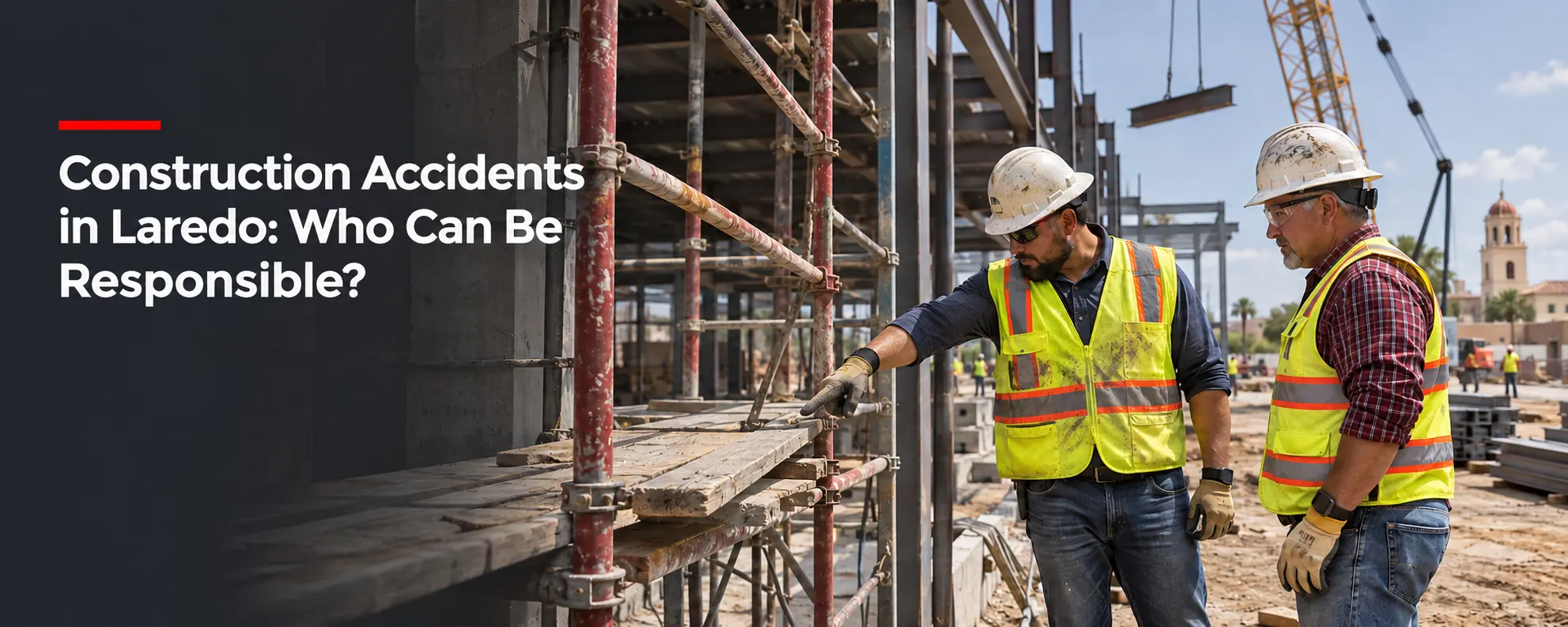
Construction sites are busy environments where workers, subcontractors, equipment operators, and multiple companies often work side by side. When an accident happens, the consequences can be serious. A fall from scaffolding, equipment failure, or an unsecured load can leave a worker with significant injuries, medical expenses, and time away from work.
After a construction accident in Laredo, one important question is: Who may be legally responsible for the injury?
The answer depends on what happened. Potentially responsible parties may include an employer, general contractor, subcontractor, property owner, equipment manufacturer, or another party. Understanding how Texas law addresses construction site injuries may help injured workers identify possible options and the steps they can take next. Learn more about construction accident cases handled by Hit Back Law in Laredo.
Common Causes of Construction Site Injuries
Construction work involves many potential hazards, especially when safety procedures are overlooked or equipment is not properly maintained. Common construction accidents include:
- Falls from ladders, scaffolding, roofs, and elevated platforms
- Injuries caused by falling tools or construction materials
- Equipment and machinery accidents
- Electrocution and other electrical hazards
- Trench collapses and structural failures
- Slips and trips caused by unsafe walking surfaces
- Accidents involving forklifts, cranes, and other heavy machinery
The Occupational Safety and Health Administration (OSHA) identifies falls, struck-by incidents, caught-in or caught-between hazards, and electrocutions as major construction safety risks. Identifying what caused the accident is an important step in determining whether someone’s negligence may have contributed to the injury.
1. Can an Employer Be Responsible for a Construction Injury?
An employer’s responsibilities may depend on whether it provides workers’ compensation coverage and on the circumstances of the accident.
Texas does not require most private employers to carry workers’ compensation insurance, although exceptions apply. Employers that do not provide this coverage are commonly called non-subscribers. The Texas Department of Insurance explains workers’ compensation coverage and non-subscriber status.
When an employer provides workers’ compensation coverage, eligible employees may be able to receive benefits for covered workplace injuries without proving that the employer was negligent.
If an employer is a non-subscriber, an injured worker may be able to bring a personal injury claim by proving the required negligence. Under Texas Labor Code § 406.033, certain defenses—such as contributory negligence, assumption of risk, and negligence by a fellow employee—are unavailable to a non-subscriber employer in the circumstances covered by the statute. The worker must still prove the employer’s negligence or the negligence of an agent or employee acting within the scope of employment.
An employer is not automatically liable just because an injury happened at work. The legal requirements and available evidence still matter. For more information, see Hit Back Law’s page about workplace injury cases in Laredo.
2. Can a General Contractor Be Held Liable?
A general contractor coordinates construction work and may oversee several subcontractors. That role alone does not automatically make the contractor responsible for every injury on the site.
Under Texas law, a general contractor’s potential liability may depend on whether it controlled the relevant work activity, controlled the premises, or otherwise owed and breached a legal duty.
In Redinger v. Living, Inc., 689 S.W.2d 415 (Tex. 1985), the Texas Supreme Court addressed a general contractor’s duties in relation to its control of a construction site and subcontractor work.
The Court discussed these principles again in JLB Builders, L.L.C. v. Hernandez, 622 S.W.3d 860 (Tex. 2021). The decision explains that control must relate to the condition or work activity that caused the injury. General supervision or scheduling authority alone may not establish a duty. In that case, the Court concluded that the general contractor did not owe a duty on the facts presented. Read the Texas Supreme Court decision.
For example, if a general contractor directs how a dangerous task must be performed and that control contributes to an injury, the circumstances may support a negligence claim. The contract, the parties’ conduct, and the evidence must be reviewed to assess the situation.
3. What About a Subcontractor or Property Owner?
A subcontractor may be responsible if its negligence creates a hazard that injures another worker. Examples might include improperly securing construction materials, operating machinery carelessly, or leaving a dangerous condition in a shared work area.
A property owner may also face potential liability if a dangerous condition on the premises causes an injury and the legal requirements for a claim are met. Learn more about premises liability cases handled by Hit Back Law.
Texas law distinguishes between injuries caused by a dangerous condition on the premises and injuries connected to an ongoing work activity. That distinction can affect which duties apply and what evidence may be needed.
A construction accident lawyer in Laredo, TX, can review the relationships between the parties and assess whether the available facts may support a claim involving a subcontractor, general contractor, property owner, or another party. Hit Back Law also handles personal injury cases in Laredo.
4. Can You File a Claim Against More Than One Party?
Potentially. A construction accident may involve several contributing factors. For example, an employer may have failed to provide appropriate training while another company supplied defective equipment or created an unsafe condition.
Depending on the evidence, more than one party may be legally responsible. Texas Civil Practice and Remedies Code Chapter 33 governs proportionate responsibility in covered cases. Under § 33.003, a factfinder may determine each party’s percentage of responsibility. Section 33.001 generally bars recovery if a claimant’s percentage of responsibility is greater than 50 percent.
These rules make it important to investigate the circumstances carefully rather than assume that only one party may be responsible.
5. What Should You Do After a Construction Accident in Laredo?
If you are injured at a construction site in Laredo, taking practical steps may help protect your health and preserve important evidence.
- Seek medical attention. Get appropriate treatment and follow medical recommendations, even if the full extent of your injuries is not immediately clear.
- Report the accident. Notify the appropriate supervisor or employer and follow workplace reporting procedures.
- Preserve evidence. If possible, photograph the accident scene, equipment, fall hazards, and relevant conditions. Record witness details and keep copies of incident reports.
- Keep records. Save medical bills, treatment records, receipts, and documentation of missed work.
- Understand your coverage. Find out whether your employer has workers’ compensation coverage and whether other companies were involved in the work that led to the injury.
- Consider legal guidance. Before signing a settlement or release, make sure you understand which claims you may be giving up.
Construction sites can change quickly after an accident, so preserving available evidence early may be helpful.
Protect Your Rights After a Construction Accident in Laredo
A construction injury does not automatically establish liability, and the potentially responsible party may not be the injured worker’s direct employer. Understanding who controlled the work, who maintained the equipment, and what caused the accident may help identify which legal options are available.
If you or a family member has suffered a construction site injury in Laredo, contact Hit Back Law to discuss the circumstances and ask what options may be available.
This article is for informational purposes only and does not constitute legal advice. Liability and recovery depend on the specific facts and applicable law.
Frequently Asked Questions
1. Who is responsible if I’m injured on a construction site in Laredo?
Responsibility depends on how the accident happened. Potentially responsible parties may include an employer, subcontractor, general contractor, property owner, or equipment manufacturer. A claim requires evidence establishing a legal basis for liability.
2. Can I sue the general contractor if I work for a subcontractor in Texas?
Potentially, depending on the facts. Under Redinger v. Living, Inc. and JLB Builders, L.L.C. v. Hernandez, a general contractor may owe a duty in certain circumstances if it retains control over the relevant work activity. General supervision alone may not be enough. The contract, actual control, and facts surrounding the injury are important.
3. What should I do after a fall at a construction site?
Seek medical attention, report the incident, preserve photographs and witness information when possible, and keep records of treatment and expenses. Consider getting legal guidance to understand your options and any applicable deadlines.
4. Can an undocumented worker file a construction injury claim in Texas?
Immigration status does not automatically eliminate every potential workplace injury claim. Available remedies and requirements may depend on the type of claim and the circumstances. An attorney can explain how the law may apply to an individual situation.
What types of cases does Hit Back Law handle?
Hit Back Law handles matters within its legal practice areas, including personal injury, criminal defense, immigration services, and insurance claims. Contact the firm directly to confirm whether it can assist with your construction accident circumstances.