

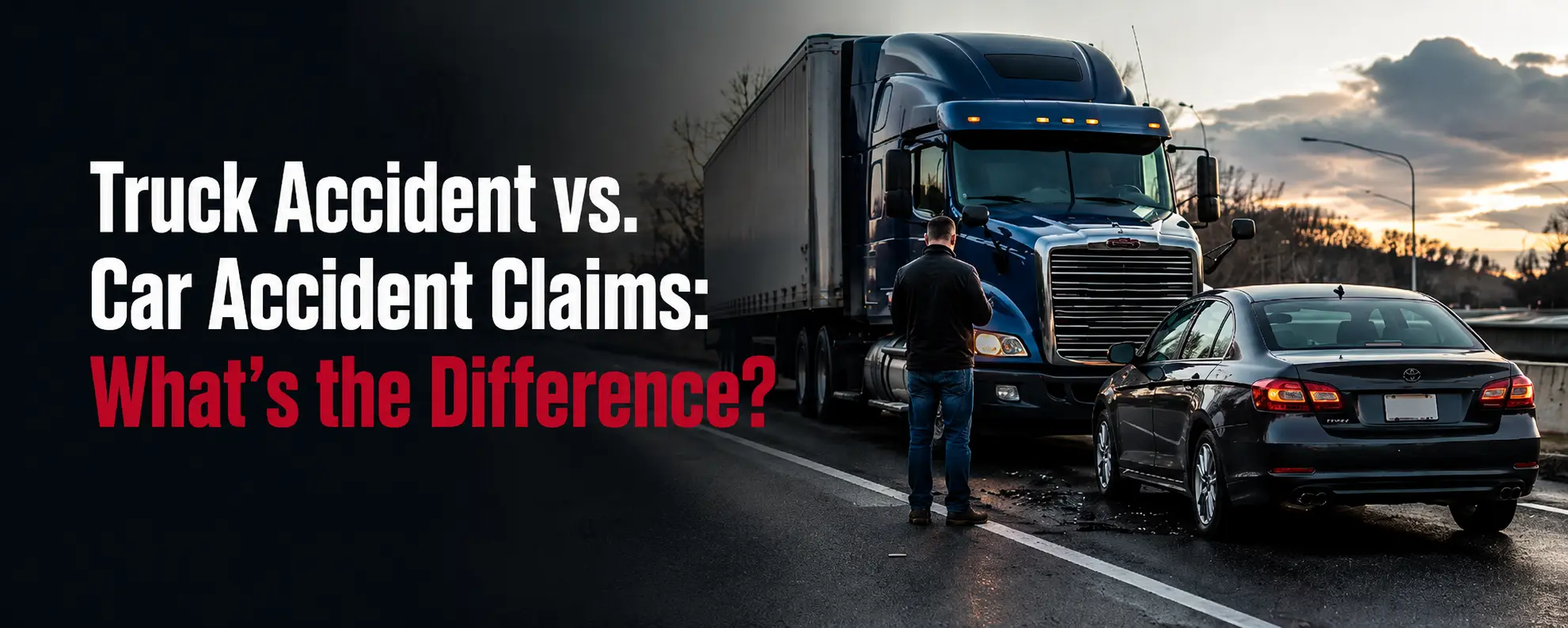
At first glance, a truck accident and a car accident may seem like they involve the same legal process. After all, both can result in injuries, property damage, insurance claims, and lawsuits.
However, from a legal perspective, they are often very different. Truck accident claims are typically more complex than standard car accident claims because they involve larger commercial vehicles, multiple potentially liable parties, federal trucking regulations, and significantly higher financial stakes.
According to the Federal Motor Carrier Safety Administration (FMCSA), large trucks were involved in more than 168,000 injury crashes across the United States in a recent reporting year. Because commercial trucks can weigh up to 80,000 pounds, collisions often result in catastrophic injuries and substantial economic losses.
If you’ve been injured in Texas, understanding these differences can help you make informed decisions and protect your legal rights.
Why Truck Accident Claims Are More Complex
A typical car accident usually involves two private drivers and their respective insurance companies. A truck accident, however, often involves an entire commercial operation.
Depending on the circumstances, the parties involved may include:
- The truck driver
- The trucking company
- The owner of the trailer
- The cargo loading company
- A maintenance contractor
- The truck manufacturer
- Multiple insurance carriers
Determining who is legally responsible requires a detailed investigation that goes well beyond reviewing a police report. This additional complexity is one of the primary reasons truck accident claims require a different legal approach than ordinary car accident cases.
Liability Is Often Shared Between Multiple Parties
In a standard car accident, liability generally rests with the driver who acted negligently. Commercial trucking accidents rarely follow such a simple pattern. For example, a truck driver may have been fatigued because the trucking company encouraged unrealistic delivery schedules. Poor vehicle maintenance could have contributed to brake failure. Improperly secured cargo may have shifted during transport, causing the driver to lose control. In these situations, responsibility may be shared among several individuals or companies. Identifying every liable party is essential because it directly affects the amount of compensation that may be available.
Federal Regulations Play a Major Role
Unlike passenger vehicles, commercial trucks operate under strict federal safety regulations established by the Federal Motor Carrier Safety Administration (FMCSA).
These rules govern nearly every aspect of commercial trucking, including:
- Hours of service to reduce driver fatigue
- Vehicle inspection and maintenance requirements
- Driver qualification standards
- Cargo securement rules
- Electronic logging devices (ELDs)
- Drug and alcohol testing requirements
Violations of these regulations may become important evidence in a truck accident claim.
Most ordinary car accident cases do not involve this additional regulatory framework.
Evidence Must Be Preserved Quickly
Evidence is important in every personal injury case. In truck accident claims, it is absolutely critical. Commercial trucking companies often possess valuable evidence such as:
- Electronic logging data
- Driver qualification files
- Maintenance records
- GPS tracking information
- Dash camera footage
- Black box (Electronic Control Module) data
- Dispatch communications
Some of this information may only be retained for a limited period unless legal action is taken to preserve it. For this reason, early legal representation can play an important role in protecting evidence that may later prove essential.
Injuries Are Often More Severe
Commercial trucks can weigh 20 to 30 times more than the average passenger vehicle. Because of this enormous size difference, truck accidents frequently result in far more serious injuries than typical car crashes.
Victims may suffer:
- Traumatic brain injuries
- Spinal cord injuries
- Multiple fractures
- Internal organ damage
- Permanent disabilities
- Wrongful death
These severe injuries often require extensive medical treatment, long-term rehabilitation, and ongoing care. As a result, truck accident claims generally involve substantially higher damages than ordinary car accident cases.
Insurance Coverage Is Usually Much Larger
Most private drivers carry insurance policies with relatively modest coverage limits. Commercial trucking companies, however, are often required to maintain significantly higher insurance coverage due to the increased risks associated with operating large commercial vehicles. Higher policy limits can provide greater opportunities for compensation, particularly in cases involving catastrophic injuries.
However, they also mean insurance companies often defend these claims much more aggressively. Large commercial insurers typically have experienced adjusters, investigators, and defense attorneys working immediately after an accident to minimize financial exposure.
The Investigation Begins Immediately
Following a serious trucking accident, trucking companies often dispatch investigators to the crash scene within hours. Their objective is to collect evidence, interview witnesses, document vehicle conditions, and begin preparing a defense.
Accident victims frequently do not realize this process has already begun while they are still receiving emergency medical treatment. This is another reason why prompt legal representation can be important in complex truck accident cases. An experienced attorney can begin conducting an independent investigation while evidence remains available.
Compensation May Include More Extensive Damages
Both truck accident claims and car accident claims may allow injured victims to pursue compensation for:
- Medical expenses
- Lost wages
- Future medical care
- Pain and suffering
- Property damage
However, because truck accidents often involve catastrophic injuries, compensation may also include significantly larger claims for:
- Future loss of earning capacity
- Long-term rehabilitation
- Permanent disability
- Life care planning
- Home modifications
- Ongoing medical assistance
Calculating these damages frequently requires medical experts, vocational specialists, and economists.
Why Choosing the Right Attorney Matters
Not every personal injury attorney regularly handles commercial truck accident litigation.
Truck accident cases require knowledge of:
- Federal trucking regulations
- Commercial insurance policies
- Accident reconstruction
- Electronic trucking evidence
- Corporate liability
- Industry safety standards
Building a successful truck accident claim often requires extensive investigation and resources beyond those used in a standard car accident case. Choosing an attorney experienced in commercial trucking litigation can make a significant difference in how effectively a claim is investigated and presented.
Conclusion
Although truck accident claims and car accident claims may appear similar on the surface, they differ in almost every important legal aspect.
Truck accidents typically involve multiple responsible parties, extensive federal regulations, more complex investigations, larger insurance policies, and significantly more severe injuries. These factors make commercial trucking cases far more challenging than ordinary motor vehicle accident claims.
If you’ve been injured in a truck accident in Texas, understanding these differences is the first step toward protecting your rights. Acting quickly helps preserve evidence, identify all liable parties, and build the strongest possible claim for compensation.
At GDL, we understand the complexities of truck accident claims in Texas. Our team works diligently to investigate commercial trucking accidents, protect critical evidence, and pursue the compensation our clients deserve. If you or a loved one has been injured in a truck accident, contact GDL today for a confidential consultation and experienced legal guidance.
Frequently Asked Questions
1. Are truck accident claims different from car accident claims in Texas?
Yes. Truck accident claims are generally more complex because they often involve multiple liable parties, federal trucking regulations, commercial insurance policies, and more extensive evidence than standard car accident claims.
2. Who can be held responsible in a Texas truck accident?
Depending on the circumstances, liability may extend beyond the truck driver to include the trucking company, cargo loaders, maintenance providers, vehicle manufacturers, or other parties whose negligence contributed to the accident.
3. Why do truck accident claims usually take longer to resolve?
Truck accident cases often require detailed investigations, expert analysis, preservation of electronic evidence, and negotiations with multiple insurance companies, making them more time-consuming than ordinary car accident claims.
4. Can I recover more compensation after a truck accident than a car accident?
Potentially. Because truck accidents often result in more severe injuries and commercial vehicles generally carry higher insurance coverage, victims may pursue compensation for extensive medical expenses, lost income, long-term care, and other significant damages.
5. When should I contact a truck accident lawyer after a commercial trucking accident?
You should contact an experienced Texas truck accident lawyer as soon as possible after the accident. Early legal intervention can help preserve important evidence, protect your rights, and strengthen your claim before critical information is lost.