

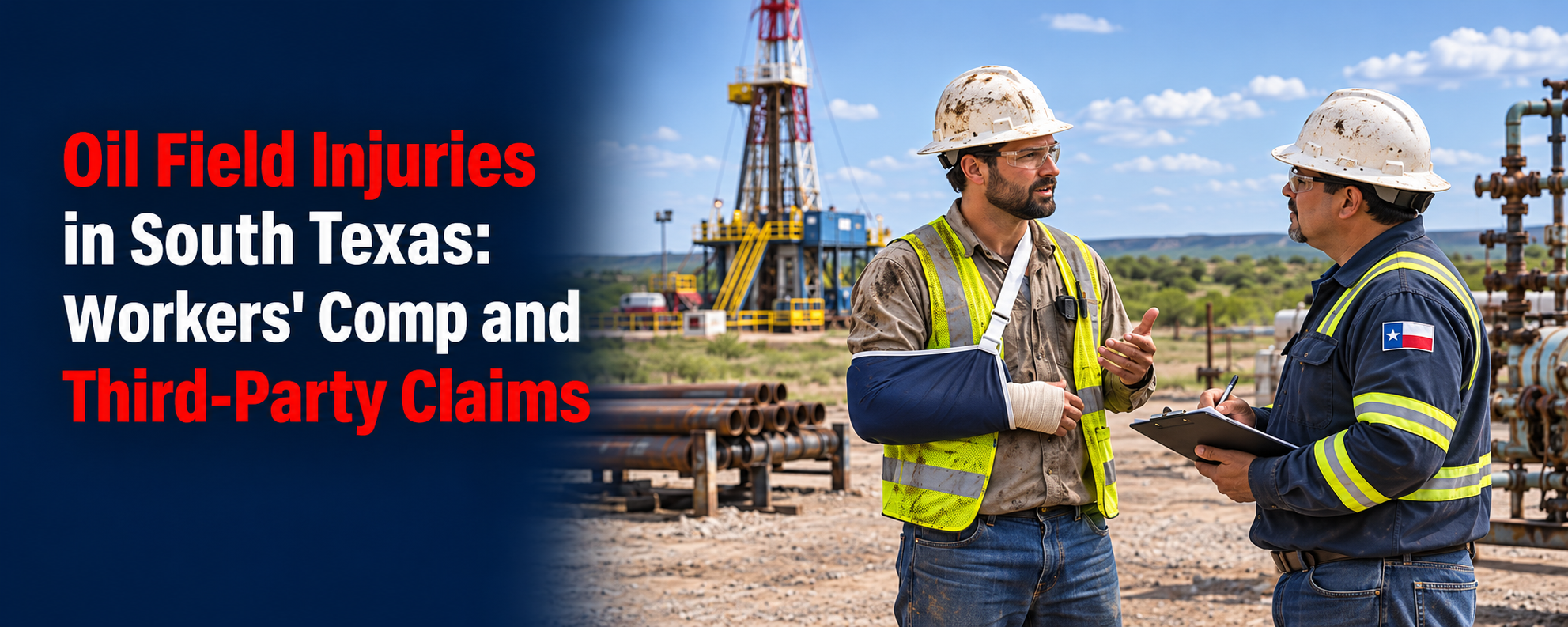
Oilfield work can involve heavy machinery, high-pressure equipment, hazardous substances, and demanding conditions. When a safety failure causes an injury, workers and their families may face medical expenses, lost income, and questions about what to do next.
For workers in the Eagle Ford Shale region and surrounding South Texas communities, the legal options after an oilfield accident depend on the circumstances. Texas generally allows most private employers to choose whether to provide workers’ compensation coverage. Depending on the employer’s coverage and how the accident happened, an injured worker may have a workers’ compensation claim, a claim against a non-subscriber employer, or a third-party personal injury claim.
An oilfield injury lawyer in Laredo can review the facts and explain which options may apply. Every claim depends on its own evidence and circumstances.
Common Causes of Oilfield Injuries
Oilfield operations may involve several employers and contractors working at the same site. Injuries can occur because of:
- Falls from platforms, ladders, or rigs
- Equipment malfunctions or unsafe machinery
- Fires, explosions, or chemical exposure
- Falling tools, pipes, or other heavy objects
- Vehicle and transportation accidents
- Inadequate training or supervision
- Improper equipment maintenance
- Unsafe site conditions
An accident alone does not establish legal liability. An investigation may need to determine how the injury happened and whether an employer, contractor, equipment manufacturer, or another party may be legally responsible.
Workers’ Compensation in Texas
Workers’ compensation can provide benefits for eligible work-related injuries without requiring the employee to prove that the employer was negligent. Under Texas Labor Code § 406.031, an insurance carrier is generally liable for compensation when a covered employee suffers an injury arising out of and in the course and scope of employment, subject to the law’s requirements and exceptions. Benefits may include medical care and income benefits, depending on the claim.
Texas differs from many states because most private employers are not required to carry workers’ compensation insurance. The Texas Department of Insurance describes employers without this coverage as non-subscribers. Some private employers may also be certified to self-insure, so coverage status should be checked rather than assumed. See the department’s coverage verification guidance.
Coverage status can affect which legal options an injured worker may have.
What If the Employer Does Not Carry Workers’ Compensation?
If an employer is a non-subscriber, an injured worker may be able to bring a negligence claim against the employer. The worker still needs evidence to establish the legal basis for the claim; non-subscriber status does not automatically make the employer liable.
Texas Labor Code § 406.033 limits certain defenses in qualifying claims involving employees who are not covered by workers’ compensation insurance. For example, the statute addresses defenses based on contributory negligence, assumption of risk, and a fellow employee’s negligence. It also requires the worker to prove the employer’s negligence or that of an agent or employee acting within the general scope of employment. The law preserves other defenses, and the facts matter.
A claim may require examining safety procedures, training, supervision, equipment maintenance, and the events leading up to the accident. A Laredo workplace injury lawyer can help assess what evidence may be relevant.
Can You Bring a Third-Party Oilfield Injury Claim?
Sometimes. A worker may have a claim against a company other than the employer if that party’s conduct or product contributed to the injury and the legal requirements for liability are met.
Depending on the facts, potentially responsible parties may include:
- A contractor that created or failed to address an unsafe condition
- An equipment manufacturer, if a defective product caused the injury
- A maintenance provider that performed negligent repairs
- A transportation company involved in a vehicle accident
- Another business whose conduct contributed to the injury
For example, if machinery maintained by an outside company fails and injures a worker, the evidence may support investigating the maintenance company or another responsible party. The worker generally must establish an applicable legal duty, a breach, causation, and damages—or another valid basis for liability.
Read more about oilfield injury claims and potentially responsible parties.
Can You Pursue Workers’ Compensation and a Third-Party Claim at the Same Time?
In qualifying cases, yes. Texas Labor Code § 417.001 allows an employee with a compensable injury to seek workers’ compensation benefits and pursue damages from a liable third party. The workers’ compensation carrier may have a subrogation interest in the third-party recovery, subject to the statute.
That interest can affect how a recovery is distributed. The amount ultimately received may depend on benefits paid or assumed, the recovery amount, costs, and other legal considerations. Before settling a third-party claim, it is important to understand how any reimbursement rights may apply.
What Should You Do After an Oilfield Accident?
Consider these steps after an injury:
- Get medical care. Seek appropriate treatment and follow your provider’s recommendations.
- Report the accident. Notify the appropriate supervisor or employer and follow applicable reporting procedures.
- Preserve evidence. If possible, keep photographs, witness details, incident reports, equipment information, and relevant communications.
- Document expenses and lost income. Keep medical bills, treatment records, wage information, and receipts related to the accident.
- Check the employer’s coverage status. Find out whether the employer provides workers’ compensation coverage or is a non-subscriber.
- Get advice before signing a release. A settlement or release may affect your rights. Consider getting legal guidance before signing.
How Do You Know If You Have an Oilfield Injury Case?
An injury at work does not automatically establish a personal injury claim. Important questions may include how the accident happened, whether someone acted negligently, whether a defective product contributed, and whether the employer carries workers’ compensation coverage.
The answers can affect whether your potential options involve workers’ compensation benefits, a claim against a non-subscriber employer, a third-party lawsuit, or more than one of these. A South Texas oilfield injury attorney can review the facts and explain the legal issues and deadlines that may apply.
Understand Your Options After an Oilfield Injury
Oilfield injuries can have lasting effects on workers and their families. Understanding the differences among workers’ compensation, non-subscriber claims, and third-party lawsuits can help you make informed decisions about what to do next.
If you were injured while working in the Eagle Ford Shale region or a nearby oilfield, contact Hit Back Law to discuss your circumstances. The firm’s website advertises free consultations; confirm the terms with the firm when you contact them.
This article is for informational purposes only and does not constitute legal advice. Eligibility, liability, and deadlines depend on the specific facts and applicable law.
Frequently Asked Questions
1. Can I sue my employer in Texas if it does not carry workers’ comp?
Potentially. A non-subscriber employer may face a personal injury claim if the injured worker can establish the required negligence and other legal requirements. Texas law limits certain defenses in qualifying cases, but non-subscriber status alone does not establish liability.
2. Can I file a workers’ comp claim and a third-party lawsuit at the same time in Texas?
In qualifying cases, yes. Texas law allows an injured employee to pursue workers’ compensation benefits and seek damages from a liable third party. The workers’ compensation carrier may have reimbursement rights against the third-party recovery.
3. Who may be liable for an oilfield injury in the Eagle Ford Shale?
Depending on the facts, a potentially responsible party could be an employer, contractor, equipment manufacturer, maintenance provider, transportation company, or another business. Evidence must establish a valid legal basis for liability.
4. How do I know if I have a personal injury case after an oilfield accident?
It depends on how the injury occurred, who may be responsible, the employer’s coverage status, and the available evidence. An attorney can review those facts and explain potential claims and deadlines.
5. Does Hit Back Law offer a free consultation?
Hit Back Law’s website advertises free consultations. Contact the firm to confirm the consultation terms for your circumstances.